Check the ladder before it becomes your way up
A straight tailgate talk for crews using extension, straight, and step ladders.
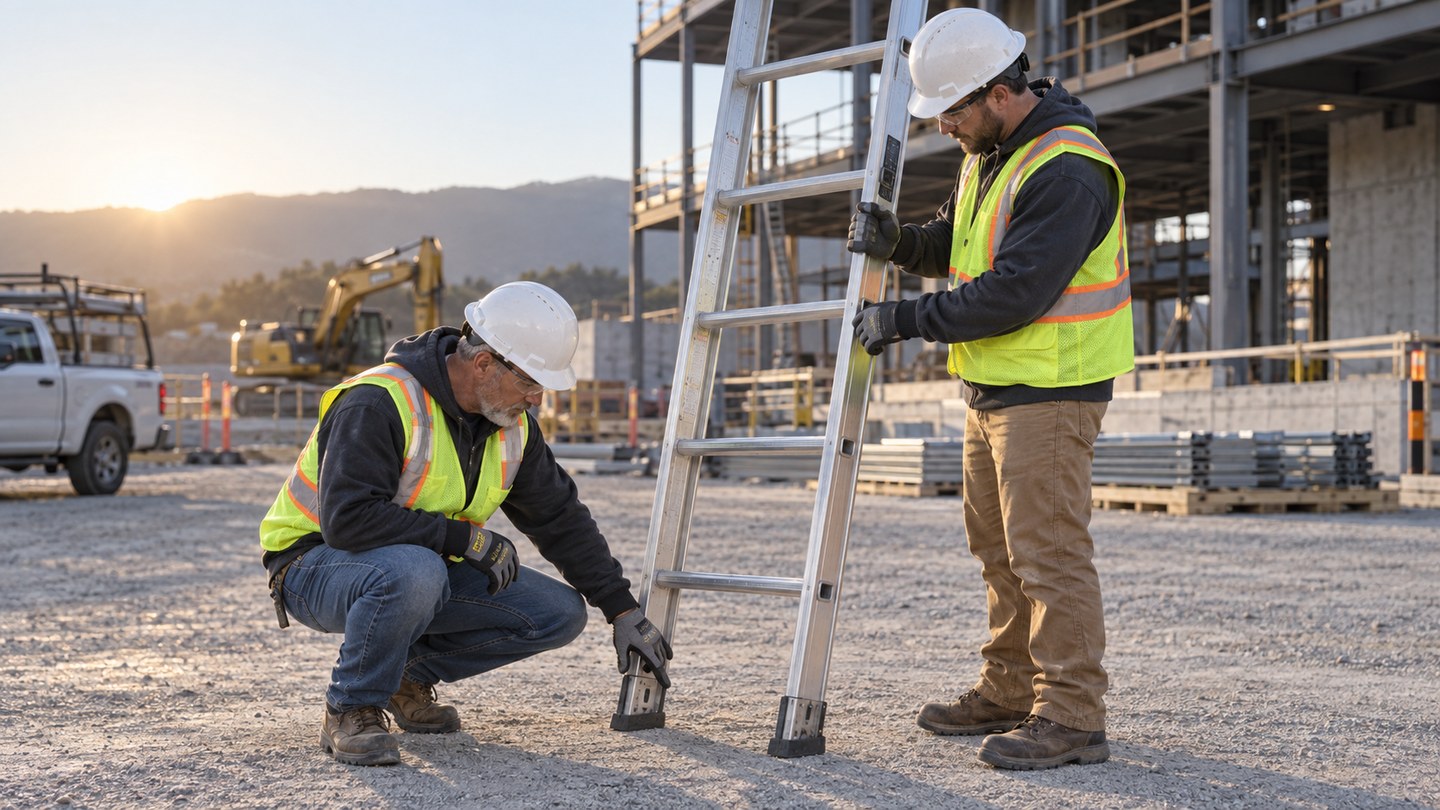
Here’s the conversation to have.
A ladder is easy to grab and easy to take for granted. That is when a bent rail, bad foot, loose rung, wrong angle, or poor landing turns into a fall. Take a minute while it is still on the ground. Look it over, make sure it is the right ladder for the work, and set it where it will not move or get hit by the rest of the job.
If it is being used for access, treat the top and bottom like part of the work area. The crew needs a stable way up, a clear way off, and a setup that stays put when the work gets moving. If the ladder is not right, do not make it work. Get the right access in place.
What needs to be checked.
- Check rails, rungs, feet, locks, rope, and hardware before the ladder goes up. Tag damaged ladders out of service.
- Set the ladder on a firm, level, clear surface. Secure it or protect it from traffic when the location could let it move.
- For access to an upper landing, make sure the rails extend at least 3 feet above it when the ladder length allows.
- Keep your hands free while climbing, face the ladder, and keep three points of contact.
Don’t just read it. Get an answer.
Use these when you need the rule or want to dig deeper.
This is a starting point for the tailgate talk. The crew, the equipment, and the job conditions in front of you decide what has to happen next.
Get next week’s talks before the Monday huddle.
Short, practical topics for the next time you have your crew together. No filler.
Get the weekly topics