Keep hands out of the pinch point
Pinch points are predictable: material is moving toward something else, and hands get there first. Keep people clear and use the right control.
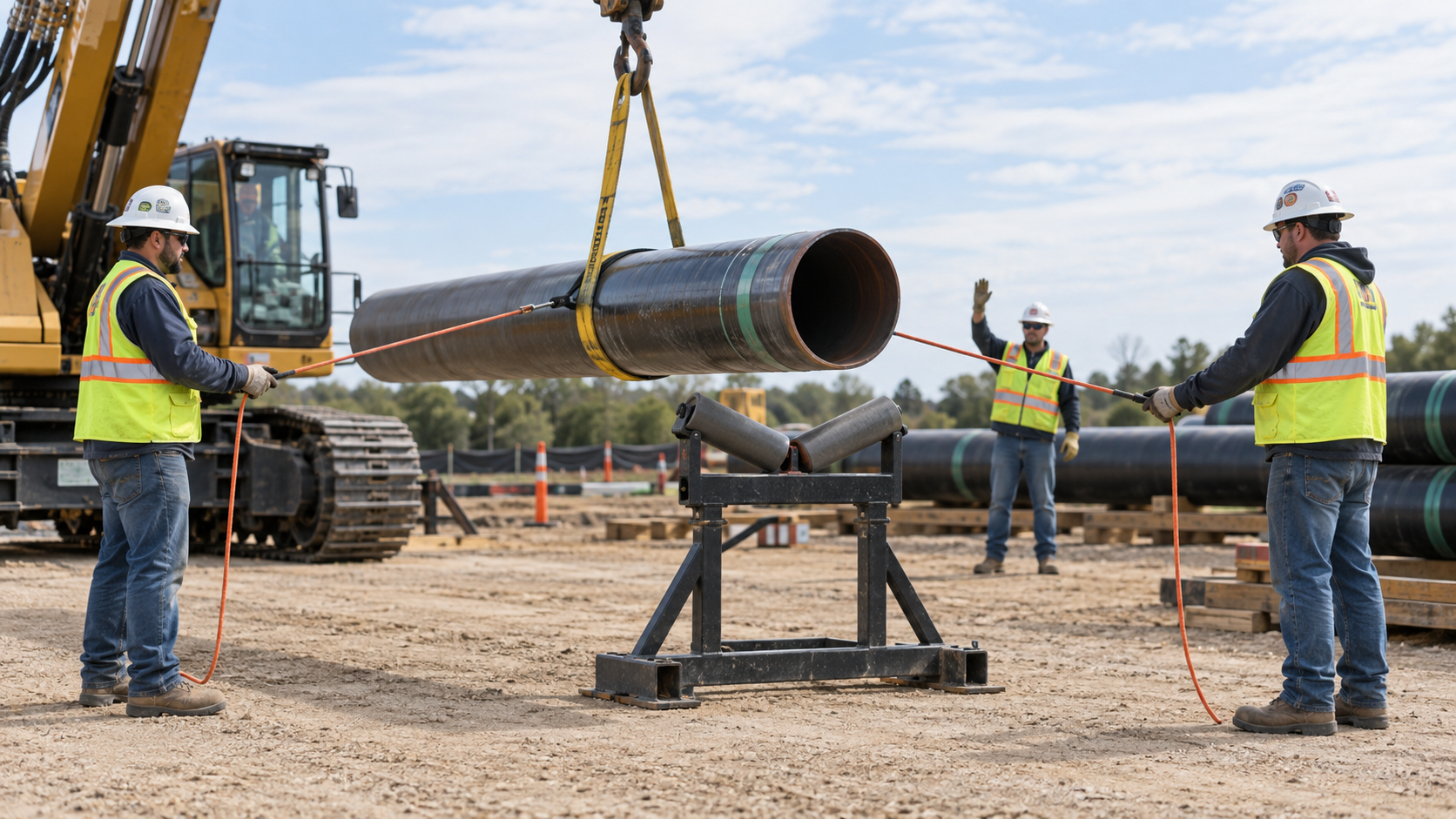
Here’s the conversation to have.
Most hand injuries are not mysterious. They happen when material is being set down, rolled into place, pushed together, or guided into a rack. The pinch point is where the material meets the stand, the wall, the ground, or another piece of material. Call it before the move starts. Decide who signals, where the hands stay, and what tool or tag line keeps people out of the squeeze. If you cannot see where the material is landing, stop and reset the move. Foremen: do not let a quick adjustment turn into a hand-under-the-load moment. Slow the move down, use the right tool, and keep hands out until the material is stable.
What needs to be checked.
- Identify every crush and pinch point before the move
- Use tag lines, push-pull tools, or mechanical aids instead of hands
- Assign one clear signal person for the move
- Keep hands clear until the material is fully supported and stable
- Stop the move when anyone loses sight of the landing area
Don’t just read it. Get an answer.
Use these when you need the rule or want to dig deeper.
This is a starting point for the tailgate talk. The crew, the equipment, and the job conditions in front of you decide what has to happen next.
Get next week’s talks before the Monday huddle.
Short, practical topics for the next time you have your crew together. No filler.
Get the weekly topics