Keep the walking path clear before it catches someone
Cords, hoses, debris, and stored material become a trip hazard the moment they enter a walking path.
Here’s the conversation to have.
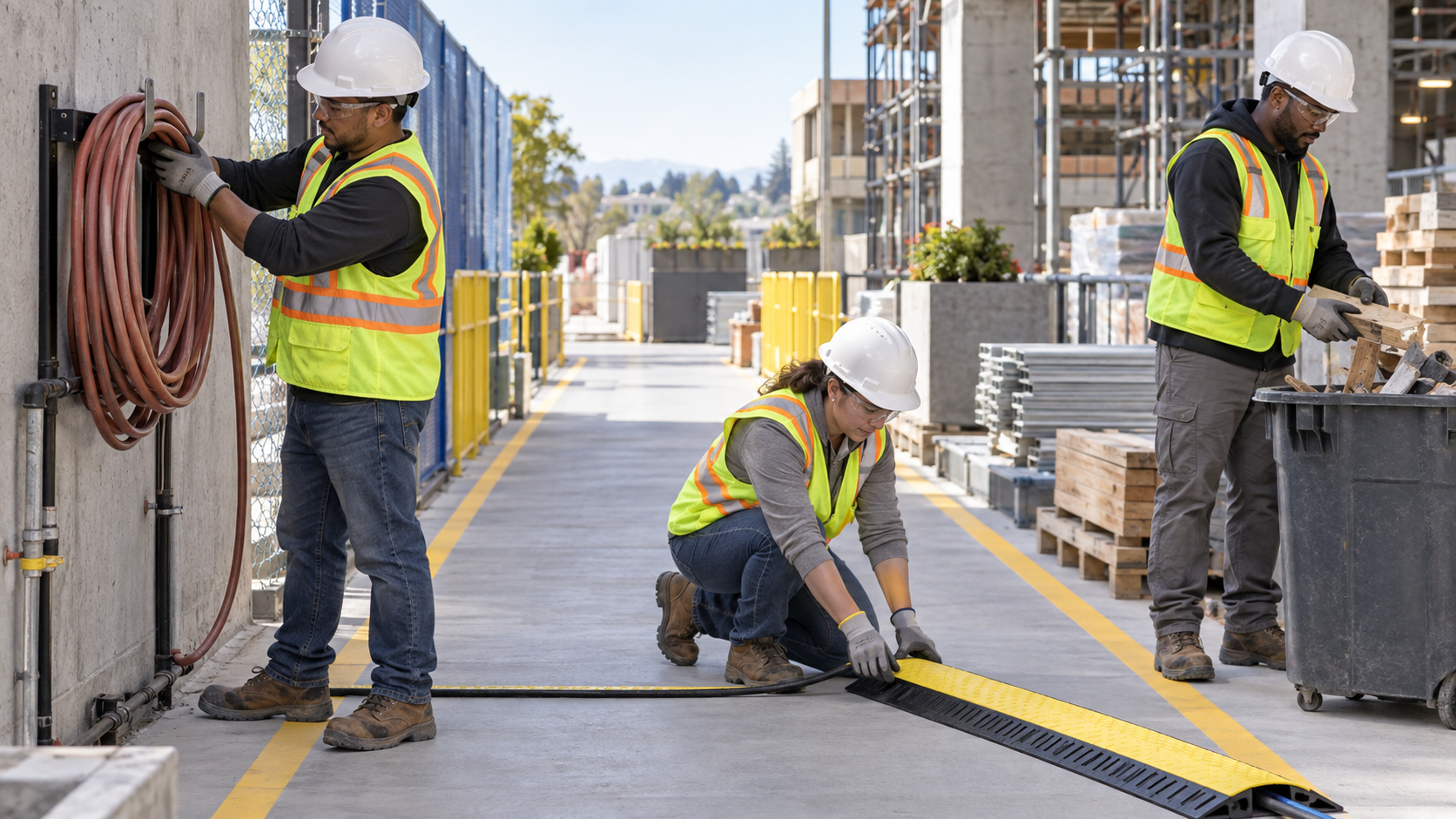
Trips do not need a dramatic hazard. A hose across a doorway, a cord beside a panel, or a few pieces of material in a route can put someone down fast. Before the shift, walk the routes people actually use: from the truck, to the work area, around equipment, through doors, and to the break area. Keep those paths clear and make the safe route obvious. Foremen: do not accept “we will move it later.” If it blocks the route now, move it now or protect it with the right cover or barrier.
What needs to be checked.
- Keep cords and hoses off walking paths or protect them with rated covers
- Store material, tools, and waste outside marked travel routes
- Maintain clear access to doors, stairs, panels, and emergency equipment
- Use bins and racks instead of leaving material on the ground
- Check the route again after deliveries or work-area changes
Don’t just read it. Get an answer.
Use these when you need the rule or want to dig deeper.
This is a starting point for the tailgate talk. The crew, the equipment, and the job conditions in front of you decide what has to happen next.
Get next week’s talks before the Monday huddle.
Short, practical topics for the next time you have your crew together. No filler.
Get the weekly topics