Plan the move before you lift
Move materials with a plan and the right handling aid before a routine lift turns into a back or shoulder injury.
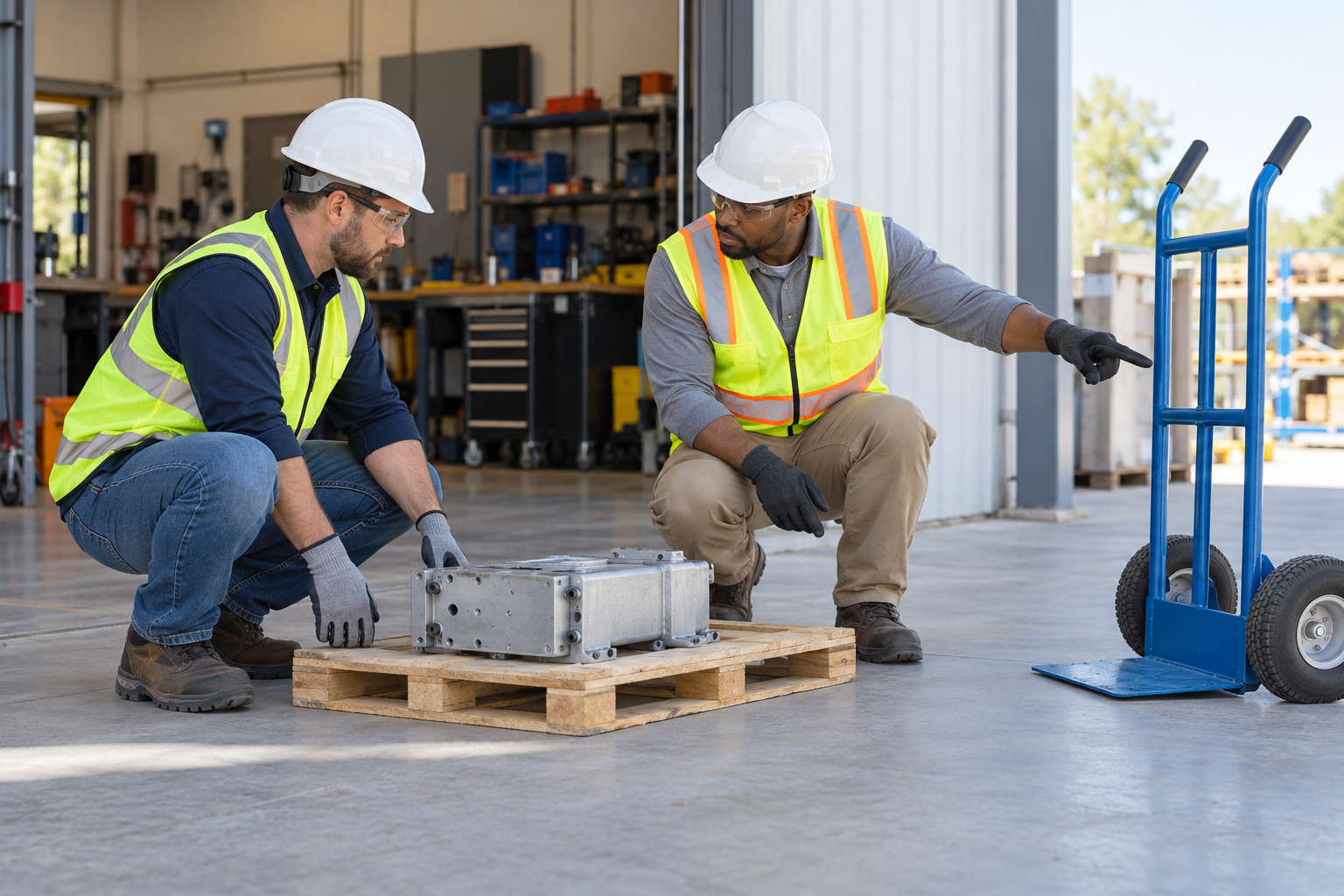
Here’s the conversation to have.
Before anybody grabs the load, decide how it should travel. Can we use a cart, hand truck, hoist, or smaller packages? Taking strain out of the job beats trying to muscle through it. Check the weight, shape, grip, route, and set-down spot. An awkward part can be too much even when it does not look heavy. If its weight or balance is unknown, stop and get the right equipment or help. For a manageable manual lift, get close, use a stable stance and secure grip, and move smoothly. Turn with your feet instead of twisting under load. A team lift needs one caller and a shared plan; extra hands do not make an unsuitable lift safe. Tell the foreman early if the task causes pain, fatigue, or repeated awkward reaches. Change the setup before the next lift.
What needs to be checked.
- Choose a suitable handling aid first and stay within its rated capacity.
- Assess weight, balance, grip, travel distance, and the set-down position before lifting.
- Break down loads or reposition materials to reduce reaching and repeated handling.
- Keep a manageable load close and turn with your feet.
- Agree on a caller and lift/set-down signals when a team lift is appropriate.
- Stop if the load shifts, grip fails, or anyone feels strain.
Don’t just read it. Get an answer.
Use these when you need the rule or want to dig deeper.
This is a starting point for the tailgate talk. The crew, the equipment, and the job conditions in front of you decide what has to happen next.
Get next week’s talks before the Monday huddle.
Short, practical topics for the next time you have your crew together. No filler.
Get the weekly topics