Shorter days need a brighter plan
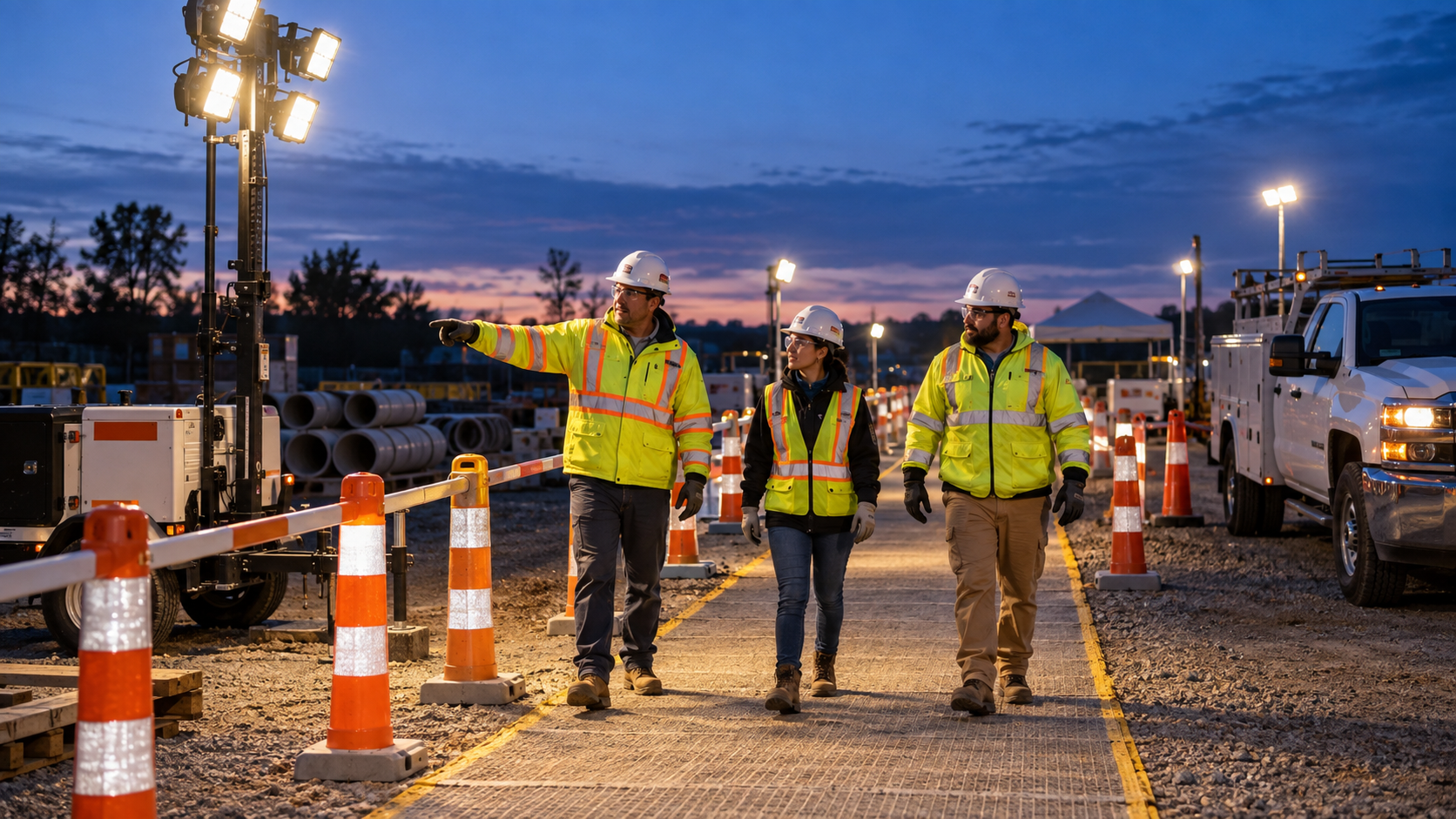
When daylight gets shorter, lighting, visibility, and the route through the work area need a deliberate check before the crew spreads out.
Here’s the conversation to have.
The calendar changes the job before the job plan does. A route that was clear at 6:00 last month may be dark now. Glare, shadows, low batteries, and a light tower pointed the wrong way can hide the hazard we would normally see. Before the shift, walk the travel path with the lights on. Check access, equipment areas, stairs, and the spot where trucks or people cross. If you cannot clearly see the next step, the area is not ready. Foremen: do not wait until someone is working in the dark to fix the lighting. Set it before the crew arrives, keep the route lit, and move the lights as the work moves.
What needs to be checked.
- Inspect the walking route and work area with the lights on
- Aim lights to eliminate shadows and glare, not just add brightness
- Keep cords, fuel, and light-stand bases out of travel paths
- Use high-visibility PPE and reflective barriers at low-light work areas
- Recheck lighting whenever the work area or weather changes
Don’t just read it. Get an answer.
Use these when you need the rule or want to dig deeper.
This is a starting point for the tailgate talk. The crew, the equipment, and the job conditions in front of you decide what has to happen next.
Get next week’s talks before the Monday huddle.
Short, practical topics for the next time you have your crew together. No filler.
Get the weekly topics